GeophyAI

Python与地球物理数据处理

0%

tensorflow之scope使用

tensorflow中名称作用域和变量作用域

名称作用域和变量作用域能让我们在tensorboard中更清晰得看到各类变量所处的命名空间以及输入、输出的流动方向。当神经网络架构较为复杂时,可以通过为网络不同块的变量和运算创建作用域的形式来使graph更整洁。(源码为官方代码,注释为翻译版,英文版请查看源码doc或者关注官方网站)

源码

1
2
3
4
5
6
7
8
9
10
11
12
13
14
15
16
17
Init signature:
tf.variable_scope(
name_or_scope, # 传入<str>或者scope
default_name=None, # 若name_or_scope==None,则自动生成具有唯一标示的名称;
values=None, # 需要用于op的Tensor列表
initializer=None, # 该scope中变量默认初始化方式
regularizer=None, # 该scope中变量默认正则化方式
caching_device=None, # 该scope中变量默认缓存设备
partitioner=None, # 该scope中变量的默认分区
custom_getter=None, # 不知道干啥的
reuse=None, # 是否重用,True,None or tf.AUTO_REUSE
dtype=None, # 变量类型(默认为传入的变量类型或者从父scope继承)
use_resource=None, # False: 所有变量均为均为常规变量。\\ True: 具有良定义语义学的experimental ResourceVariables
constraint=None, # 在优化器更新变量之后,使用一个投影函数对输出进行变换。
auxiliary_name_scope=True, # True:创建一个辅助name scope;该变量不具有继承属性,\\ 只有第一次创建时才有作用;所以应在重新进入已经创建好的scope时才使用。
)
# 函数返回一个可以被capture和reuse的socpe。

函数注释:

一个定义varslayers生成ops的上下文管理器。

这一上下文管理器会确认(可选)values是否来自于同一graph,确保graph是默认graph,并且会push名称作用域(name_scpoe)和变量作用域(variable_scope)

如果name_or_scope不为None,则使用as is.如果scopeNone,则使用default_name。此时,如果已经使用过相同的名字,则在其后添加_N表示第N个具有相同名称前缀的作用域或变量来使其具有唯一性。

variable_scope中可以创建新的变量,也可以共享已经创建的变量,并且可以检查是否存在意外创建或共享的情况。

创建一个新的变量:

1
2
3
4
with tf.compat.v1.variable_scope("foo"):
with tf.compat.v1.variable_scope("bar"):
v = tf.compat.v1.get_variable("v", [1])
assert v.name == "foo/bar/v:0"

安全进入一个已经创建好的variable scope

1
2
3
4
5
6
7
8
9
10
11
12
13
14
15
16
17
18
19
with tf.compat.v1.variable_scope("foo") as vs:
pass

# 重新进入变量作用域
with tf.compat.v1.variable_scope(vs, auxiliary_name_scope=False) as vs1:
# 重建原始的名称作用域
with tf.name_scope(vs1.original_name_scope):
v = tf.compat.v1.get_variable("v", [1])
assert v.name == "foo/v:0"
c = tf.constant([1], name="c")
assert c.name == "foo/c:0"
>>> print(v)
<tf.Variable 'foo/v:0' shape=(1,) dtype=float32_ref>
>>> print(type(v))
<class 'tensorflow.python.ops.variables.RefVariable'>
>>> print(c)
Tensor("foo/c:0", shape=(1,), dtype=int32)
>>> print(type(c))
<class 'tensorflow.python.framework.ops.Tensor'>

通过 AUTO_REUSE共享变量:

1
2
3
4
5
6
7
8
9
10
11
def foo():
with tf.compat.v1.variable_scope("foo",
reuse=tf.compat.v1.AUTO_REUSE):
v = tf.compat.v1.get_variable("v", [1])
return v

v1 = foo() # 创建变量 v.
v2 = foo() # 获取创建的 v,即v1.
assert v1 == v2
assert id(v1) == id(v2)
# 相当于v1和v2均指向相同的内存地址

通过 reuse=True共享变量:

1
2
3
4
5
6
with tf.compat.v1.variable_scope("foo"):
v = tf.compat.v1.get_variable("v", [1])
with tf.compat.v1.variable_scope("foo", reuse=True):
v1 = tf.compat.v1.get_variable("v", [1])
assert v1 == v
assert id(v1) == id(v)

在当前scope内设置reuse:

1
2
3
4
5
6
# 注意:必须要把scope.reuse_variables()放在已创建的变量之后以及重用之前。
with tf.compat.v1.variable_scope("foo") as scope:
v = tf.compat.v1.get_variable("v", [1])
scope.reuse_variables()
v1 = tf.compat.v1.get_variable("v", [1])
assert v1 == v
为了避免变量的意外共享,当并未在scope中设置reuse而重复定义相同命名的变量时会抛出ValueError

1
2
3
4
with tf.compat.v1.variable_scope("foo"):
v = tf.compat.v1.get_variable("v", [1])
v1 = tf.compat.v1.get_variable("v", [1])
# Raises ValueError("... v already exists ...").

同样地,当reuseTrue时,如果第一次定义变量也会抛出VauleError(即没有可以用来重用的变量):

1
2
3
with tf.compat.v1.variable_scope("foo", reuse=True):
v = tf.compat.v1.get_variable("v", [1])
# Raises ValueError("... v does not exists ...").

reuse的继承属性:当打开一个reusing作用域时,其中的所有子作用域也将是resuing的。

多线程环境中的变量作用域说明:variable scope是线程的局部变量,所以一个线程的scope对于另一线程而言是不可见的。另外,当使用default_name,唯一的scope名称也只是相对于每一个线程而言的,如果多个线程使用了相同的名字,一个新的线程仍然能够创建相同的scope

以下示例中,变量是被线程共享的(同一graph中)。严格来讲,只有当resueTrue时,线程在创建其它线程已经创建过的同名变量时才会成功。

另外,每个线程的起始scope为空,所以如果想在其它线程中保留主线程scope中变量的名称前缀,需要capture主线程的scope并在其它线程中重新进入这一scope,例:

1
2
3
4
5
6
7
8
main_thread_scope = variable_scope.get_variable_scope()

# Thread's target function:
def thread_target_fn(captured_scope):
with variable_scope.variable_scope(captured_scope):
# .... regular code for this thread

thread = threading.Thread(target=thread_target_fn, args=(main_thread_scope,))

实例

variable_scope

1
2
3
4
5
6
7
8
9
10
scope1 = "Test1"
with tf.variable_scope(scope1):
testA = tf.get_variable("testA1", [3, 256, 256])
testB = tf.get_variable("testA2", [3, 256, 256])
testC = tf.multiply(testA, testB, name = "Mul-testA12")
testD = tf.Variable([1],name="testD")
# testA: <tf.Variable 'Test1/testA1:0' shape=(3, 256, 256) dtype=float32_ref>
# testB: <tf.Variable 'Test1/testA2:0' shape=(3, 256, 256) dtype=float32_ref>
# testC: Tensor("Test1/Mul-testA12:0", shape=(3, 256, 256), dtype=float32)
# testD: <tf.Variable 'Test1/testD:0' shape=(1,) dtype=int32_ref>

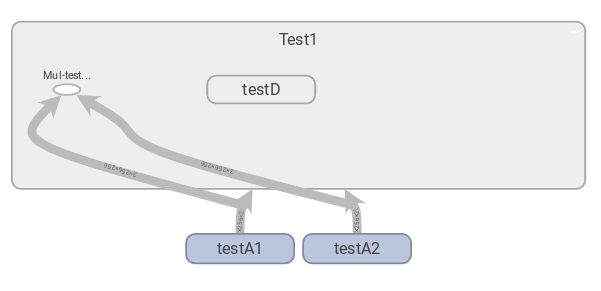
可以看到variable_scope能够同时影响到tf.get_variable以及op的命名,也就是说,变量域的作用范围内命名的变量,其前缀为变量域名。
Tensorboard

name_scope

1
2
3
4
5
6
7
8
9
10
scope1 = "Test1"
with tf.name_scope(scope1):
testA = tf.get_variable("testA1", [3, 256, 256])
testB = tf.get_variable("testA2", [3, 256, 256])
testC = tf.multiply(testA, testB, name = "Mul-testA12")
testD = tf.Variable([1],name="testD")
# testA: <tf.Variable 'testA1:0' shape=(3, 256, 256) dtype=float32_ref>
# testB: <tf.Variable 'testA2:0' shape=(3, 256, 256) dtype=float32_ref>
# testC: Tensor("Test1/Mul-testAC:0", shape=(3, 256, 256), dtype=float32)
# testD: <tf.Variable 'Test1/testD:0' shape=(1,) dtype=int32_ref>

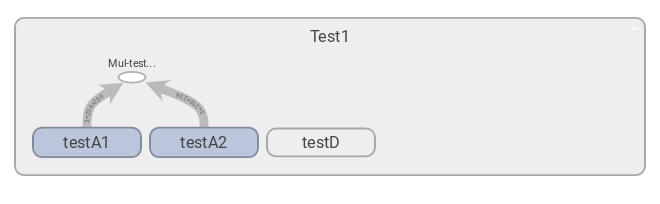
而在name_scope中,其不会影响到由tf.get_variable得到的变量,只会作用于op运算得到的变量以及由tf.Variable得到的变量。
Tensorboard